The transition from military service to civilian life often carries an invisible weight. For many veterans, Post-Traumatic Stress Disorder (PTSD) creates a persistent battle long after the uniform has been put away, leading to hypervigilance, isolation, and debilitating anxiety.
While traditional therapies are crucial, finding simple, accessible activities that offer immediate mental relief can be life-changing. Enter pickleball—the fastest-growing sport in America—and a powerful advocate, Ron Tebo of StepOutVeterans.com.
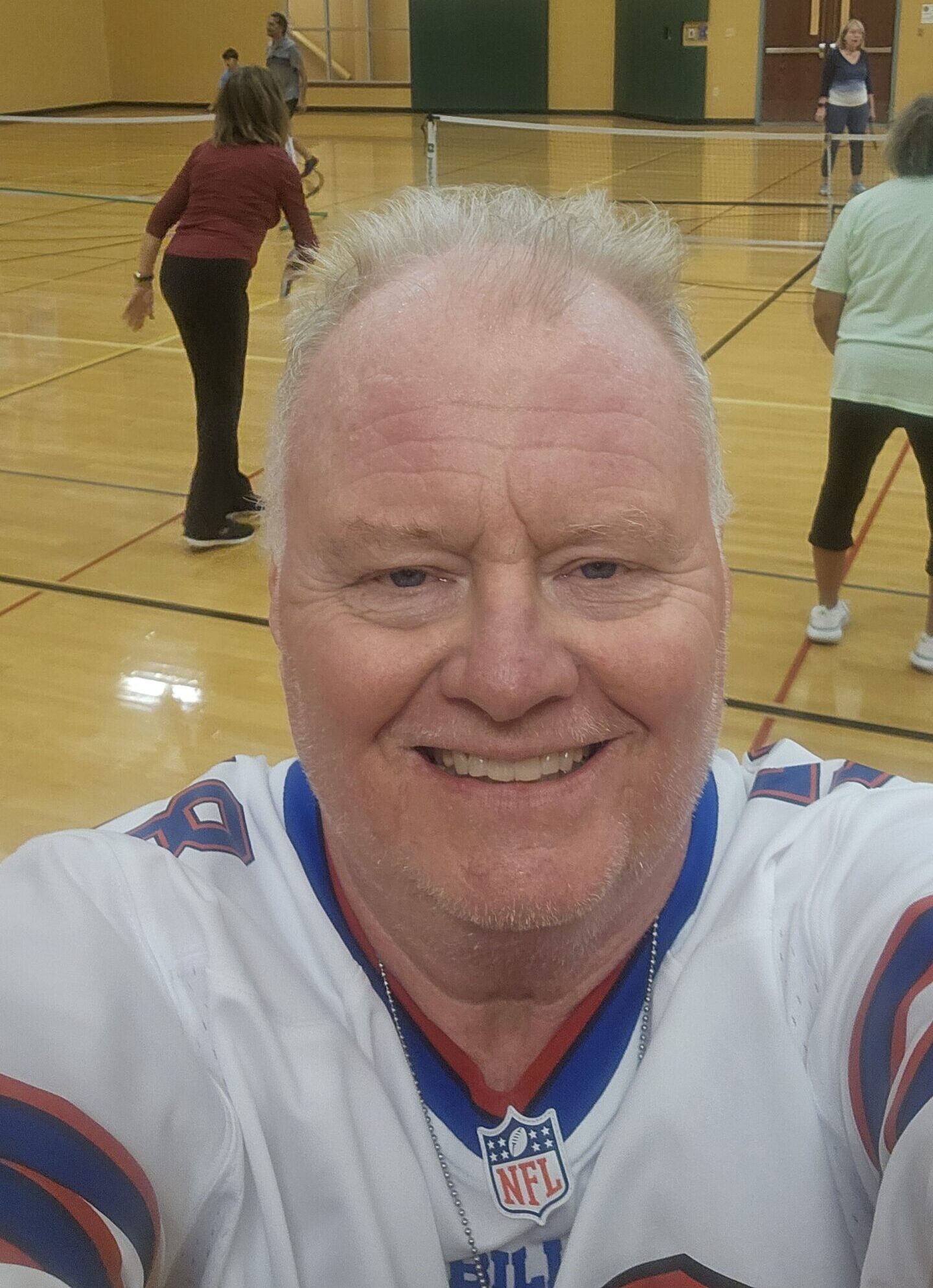
Ron Tebo knows that recovery requires taking action, stepping out of the shadows of isolation and into the light of community. He strongly encourages veterans suffering from PTSD to grab a paddle, step onto the court, and start playing. And he wants them to play with me.
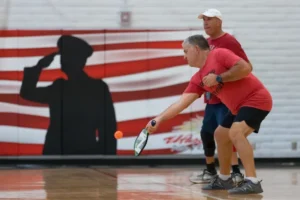
Pickleball for veterans.
Why Pickleball Works Where Other Sports Fail
When addressing the challenges of PTSD, recovery programs often prioritize activities that are low-stress, engaging, and predictable. Pickleball fits this description perfectly—and that’s why it’s proving to be an unexpectedly effective therapeutic tool.
1. The Power of “Directed Focus”
One of the most debilitating symptoms of PTSD is hypervigilance—the inability to turn off the heightened awareness of threats. This internal state of emergency makes relaxation impossible.
Pickleball, however, requires focused attention. To follow the Wiffle ball, track your opponent, and manage the “kitchen” (the non-volley zone), you must be entirely present. This external, directed concentration pulls the veteran out of internal rumination and anxiety loops. For 30 minutes, the only thing that matters is the game.
2. Low Barrier, High Reward
Unlike high-impact sports (which can spike cortisol levels and create physical pain) or complex sports (which require weeks of training), pickleball is approachable:
- Low Impact: The smaller court and short bursts of movement are easier on aging joints and service-related injuries.
- Simple Rules: Most people can learn the basics in under ten minutes, minimizing the anxiety associated with trying something new.
- Controlled Environment: The court is small and enclosed, making it feel less overwhelming than a vast tennis court or gymnasium.
3. The Synchronization of Skill and Socialization
Isolation is a major threat to veterans dealing with trauma. Pickleball inherently reverses this.
It’s almost always played in doubles (two-on-two), requiring communication, teamwork, and synchronized movement. This cooperative setting helps veterans:
- Relearn Trust: Working with a partner in a non-threatening, low-stakes situation rebuilds social muscles.
- Engage in Positive Social Interaction: The pace of the game allows for natural conversation, laughter, and camaraderie—essential elements missing during periods of isolation.
- Develop a Routine: Showing up for a regular game creates a structure and predictability that counters the chaos PTSD often imposes on daily life.
Ron Tebo: The Voice of Encouragement
Ron Tebo of StepOutVeterans.com has dedicated his mission to empowering veterans to find practical ways to improve their mental and physical well-being. He understands that veterans often need a gentle nudge and a concrete activity—not just talk therapy—to start the healing process.
“The greatest challenge is the first step,” Ron says. “It’s easy to retreat, but isolation only feeds the PTSD cycle. Pickleball offers a simple, fun entry point to reintegration. It’s hard to stay hyper-focused on internal trauma when you’re laughing at a terrible shot and shaking hands with your opponents.”
Ron’s message is clear: It’s time to step out.
Our Invitation: Grab a Paddle and Join the Court
Hearing Ron Tebo’s passion for this mission inspired me deeply. That is why Ron is specifically encouraging veterans struggling with PTSD to join me on the pickleball court. We are committed to creating a space that is welcoming, pressure-free, and designed specifically for veterans looking for a therapeutic outlet.
We aren’t focused on championships; we are focused on connection, rhythm, and the profound relief that comes from spending an hour focused entirely on a small, yellow ball.
This is more than just a game; it’s a form of active meditation. It’s a safe connection. It’s physical movement that releases endorphins without triggering fight-or-flight stress.
If you are a veteran dealing with the lingering effects of trauma, please know this: The pickleball community is ready to welcome you. Ron Tebo is championing this cause, and I am ready to be your partner on the court.
Healing happens when you take the step—when you grab the paddle.
Ready to Step Out?
If you or a veteran you know is ready to try pickleball as a path toward symptom reduction and community connection, reach out. We can help connect you with local veteran-friendly courts and programs.
Visit StepOutVeterans.com to learn more about Ron’s mission, and contact us directly to coordinate your first game. Let’s trade the battle scars for pickleball bruises and serve up some serenity together.